✅ Why customer-centric design is still rare (but powerful) 🔧 The role of diagnostics, modeling, and scenario thinking 💡 Why “benchmarking” can be a trap that leads to average 🚫 What happens when you design for people—not work 🎯 And how org clarity and talent insight unlock performance over time
Whether you’re designing from a $50M base or leading at $8B scale—Brandon’s approach is one you’ll want to take from. If you want practical, grounded org design that starts with strategy, centers the customer, and scales with clarity—this is a must-listen.
In 2024, we worked to strengthen our brand awareness and to better communicate our points of differentiation to current and potential clients. We wanted to approach this in the same way we would advise our clients, including a practical diagnostic to learn from our clients’ experience with our services and delivery. By doing this, we aimed to grow awareness and support for inbound opportunity flow, optimize our brand’s messaging, communicate our differentiated value proposition, and ultimately be the easiest partner to work with and refer. Here, we’re sharing our process, what we learned through the process, and to exemplify how we work – applied to our services.
The Work:
We started by reaching out to select customers we have completed projects with and asked if they would be willing to provide feedback on their experience working with us. After they agreed, we sent a short request with some prompting questions (shared below) and requested either a reply or a short call to discuss their responses.
Re: Work Arts Feedback Request
Hi <Client>,
Thank you for agreeing to provide some feedback on your experiences with us. We’re entering year five of our advisory practice and are working on refining the marketing and promotion of my advisory and design services. Your insights are incredibly valuable to me.
I’m interested in learning about your experience working with us and what has been most impactful for you. Specifically, I’d love to hear your thoughts on:
What would you say are the most impactful results we’ve achieved?
What differentiates our approach from other advisors/designers you’ve worked with?
How would you describe our services to a friend or colleague who might be looking for similar assistance?
Are there any areas where you feel I could improve or expand my offerings?
Your feedback will help me better understand your needs and tailor my services to provide even greater value to clients. Please share your thoughts in a quick email reply or, if you prefer, we can schedule a brief call to discuss.
Best,<Signature>
After receiving the group of responses, we reviewed them for themes and created a series of case studies and testimonials.
The Results:
These cases and testimonials will share the experience and view of our customers through a series of posts that both illustrate our body of work and honor the privacy of our clients.
We also fed the responses into Gemini AI, asking for it to draft a summary of the testimonial themes. With the help of Gemini, we created the following summary:
Since completing this work, we have been leveraging what we learned from this project to deploy learnings across our Work Arts social media feeds, our website, service summaries, and proposal templates, and we plan to make this process a part of our ongoing account management process.
This Work Arts interview highlights my June discussion with Julian Chender, talking all things Organization Design & Development. We discuss where we’ve come from, where we are going, as well as the foundation of social science and management/business science that shape what we know as organization development.
Julian shares some backstory on the historical foundations of the recent ODReview published article, OD in Times of Disruption, he co-authored with Corrie Voss, MOD, Ed.D. With enduring social science, we continue to appreciate and apply the work of original thinkers like Kurt Lewin, Edgar Schein and Jay R. Galbraith, from the early work in the OD field. On the management/business side, we continue to evolve as organizations face new challenges, leading to the need for both scale and agility. Finally, Julian shares insights on what he is learning as a part of the Fellowship Program at Kates Kesler.
Julian Chender is an Organization Development and Design practitioner and scholar. He oversaw Leadership Development at the National Institute of Allergy and Infectious Disease during the global Ebola and Zika outbreaks and then at Veldhoen + Company helped organizations align their culture, technology and physical space to meet strategic goals. He is now a Fellow at Kates Kesler Organization Consulting, part of Accenture, where he consults on large organization design projects. Julian is Founder of the OD Salon and was the 2020 recipient of the OD Network’s Emerging Practitioner Award.
Arts We Like is a series of posts spotlighting great thinkers, ideas, products and partners that we share to help enable remarkable performance through more effective and engaged organizations. Contact Us about how to deploy these solutions as a part of a broader HR Strategy or engagements to develop your organization, capabilities and talent.
When communicating and delivering foundational information and services to your organization lag the rate of decision making and change, It’s like a latency tax that constrains performance and frustrates your team.
“…every business must be world class at all forms of synchronous and asynchronous communications, to sustain culture across the organization.”
HR, IT and other functional leaders are working to transform their service delivery models to improve employee experience, performance and cost. While many have mature Shared Service Center operations in Best Cost Countries (BCC), these approaches are being challenged with accelerating labor cost inflation, labor scarcity and turnover.
I was recently introduced to MeBeBot and managed to sit down with Founder and Chief Bot, Beth White, to talk about how MeBeBot brings innovative options that deliver many of the benefits of BCC Shared Service approaches while also improving employee experience and cost through technology integrated into Slack and Microsoft Teams.
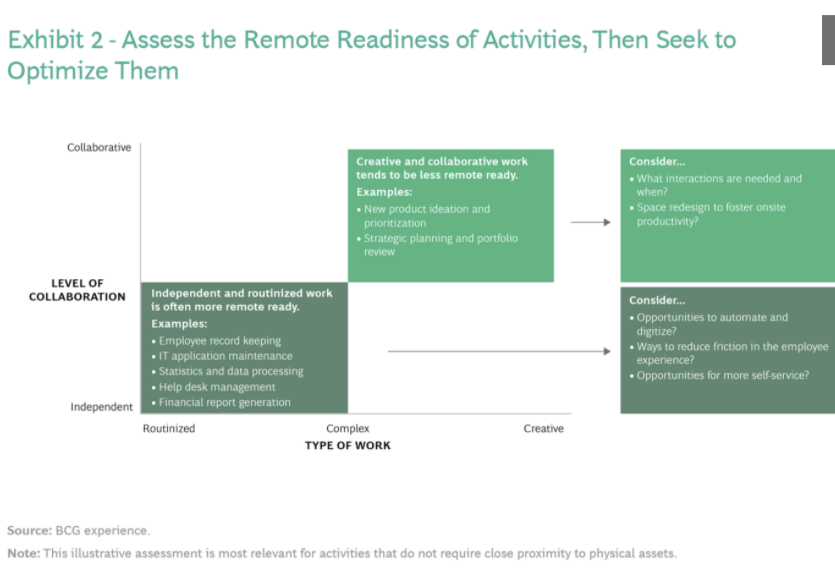
If you are considering a work enablement strategy to improve the quality, delivery and cost of your functional service delivery, MeBeBot may fit nicely as an investment in automation for highly routinized tasks that do not require significant collaboration. This can strengthen your employee experience, add capacity without adding headcount, and as Beth states, “this is about job elevation.”
Arts We Like is a series of posts spotlighting great ideas, products and partners that we share to help enable remarkable performance through more effective and engaged organizations. Contact Us about how to deploy these solutions as a part of a broader HR Strategy or engagements to develop your organization, capabilities and talent.
When you choose to brand as Work Arts, you search to see what the world finds when they – hopefully – seek you out in the future. The most interesting thing I found is a British Performance Artist, based in Munich, named Marcus John Henry Brown who publishes amazing media worthy of being shared. He describes his work in a film titled Red Pill Blue Pill as “Lighthearted mixed-media nightmares, that will not be seen in galleries. Stories of the future… impact that you and I are having on the future.”
The video above is part three from a four video series that Marcus published titled the Corporate Artist Series, where he presents working as a corporate artist as way to defend your soul and your workplace from the “Corporate Saboteur” (including the mythical Klaus-Dieter from procurement).
Be frustrated less and thwart saboteurs
In the series, he reveals that while this might seem crazy, it lines up with what is sacred at Amazon (I asked about the connection. He knows Amazon… his wife is a leader there).
Marcus shares some simple tips and tricks to take a first step as a corporate artist:
Have a curiosity book – find out something new everyday, write it down, to help you value ideas
Take a photograph everyday – it will make you look harder at the world around you, capturing the world a bit more
Go for walks
Create a body of work – order and structure your work – regard it as art
Work hard at understanding why the world works how the world works
I contacted Marcus and asked to have a call with him to talk about his work. He accepted. The discussion was fantastic.
Summarizing time with Marcus without video didn’t seem right…I decided to be adventurous. With a recorded Zoom call, I downloaded iMovie and share with you my very first video. From a very generous 90 minute discussion, I present 11 minutes of Marcus John Henry Brown in interview. Be sure to watch to the end where Marcus shares insights from his Speakery work (5:20) and readings from his clever, provocative and entertaining poem A Wicked Pack of Cards (7:25).